
- This event has passed.
And why the digital public sphere makes it easier than ever.
Authoritarian regimes have always tried to rewrite history. What’s new is the speed, precision, and deniability with which they can now do it.
This roundtable maps the modern toolkit of manufactured amnesia — censorship and network shutdowns, legal harassment, platform capture, and the strategic flooding of the information space with confusion. We’ll look at how memory gets broken not only by deleting the past, but by making it hard to find, unsafe to publish, or impossible to verify.
If the twentieth century taught us that archives can restrain power, the twenty-first is testing whether they can survive power — especially when the battlefield is the infrastructure of everyday life.
Panelists:
M. Gessen (The New York Times), 2026 Pulitzer Prize winner for Opinion Writing.
Steven Feldstein (Carnegie Endowment for International Peace).
Sarah Myers West (AI Now Institute)
Moderated by Ilia Venyavkin (Kronika).
Additional speakers to be announced.
Tickets are required for this event. To secure a ticket below, registrants must provide their full first and last name(s), including for any guests. Incomplete or partial information will result in the cancellation of the ticket reservation.
What is “digital oblivion”?
Digital oblivion is a term being developed at Kronika to name something that existing vocabulary kept splitting apart: the disappearance of essential evidence, knowledge, and stories from the digital sphere. We use it to hold three processes together, because in practice they compound one another.
Deliberate removal. Information disappears through the actions of states, corporations, or other structures of power — political censorship, blocked websites, archives deleted under threat of persecution, the systematic clearing of traces left by independent media and civic initiatives.
Invisible disappearance. Information vanishes quietly, without anyone deciding to erase it: material never taken into an archive, blogs and photographs lost when a platform shuts down, obsolete formats, technical failure, and the steady privatization of digital memory. No political decision is required for a community’s history to be gone.
AI-driven forgetting and distortion. When models are trained on incomplete data — when whole regions, languages, or events are simply absent — the result is a second-order oblivion. AI becomes unaware of what once existed, generates flattened or false versions of events, and, where it has learned from material that was already censored, reproduces and amplifies that censorship. Records that survive the first two threats can still vanish from the tools we increasingly use to search, analyze, and understand.

About the program
Digital Oblivion: Who Controls What We Remember? is a series of public conversations produced by Kronika, an initiative working to safeguard endangered independent media and keep vulnerable information available in open access.
The series brings together researchers, journalists, technologists, and human rights practitioners to test the boundaries of the concept — where engineered erasure ends and structural neglect begins, whether the distinction between the two can be maintained, and what it would take to build archives capable of outlasting the power they document.
About the speakers
 M. Gessen is a co-founder of Kronika and Opinion columnist at The New York Times and one of the most incisive contemporary analysts of democracy and autocracy. They are the author of eleven books, including the National Book Award–winning The Future Is History: How Totalitarianism Reclaimed Russia, the bestselling The Man Without a Face: The Unlikely Rise of Vladimir Putin, and Surviving Autocracy, their influential account of the Trump era. Gessen’s work has shaped public understanding of political repression, L.G.B.T. rights, Russia under Putin, and the global rise of authoritarianism; their 2016 essay “Autocracy: Rules for Survival” became essential reading in the aftermath of the U.S. election. Gessen previously spent many years as a staff writer at The New Yorker and has written for The Washington Post, Harper’s, The New York Review of Books, and Vanity Fair. They are the founding director of the Russian Independent Media Archive (RIMA) and the first Distinguished Professor at the Craig Newmark Graduate School of Journalism at CUNY, with prior teaching appointments at Amherst, Oberlin, and Bard Colleges. A recipient of the 2026 Pulitzer Prize for Opinion Writing, George Polk Award for opinion writing (2024), the Guggenheim Fellowship, the Andrew Carnegie Fellowship, the Nieman Fellowship, the Hitchens Prize, and the Overseas Press Club Award for Best Commentary, Gessen has lived in New York since 2013, following more than two decades as a journalist and editor in Moscow.
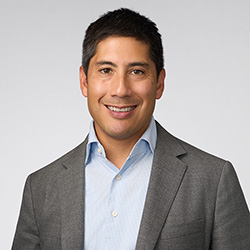 Steve Feldstein is a senior fellow at the Carnegie Endowment for International Peace where he focuses on technology, national security, the global context for democracy, and U.S. foreign policy. His new book, Bytes and Bullets: Global Rivalry, Private Tech, and the New Shape of Modern Warfare (St. Martin’s Press) comes out September 2026. He is also the author of The Rise of Digital Repression: How Technology is Reshaping Power, Politics, and Resistance (Oxford, 2021), which was the recipient of the 2023 Grawemeyer Award for Ideas Improving World Order. He has published research on digital technology’s impact on war, how AI is reshaping repression, the global demand for drones, China’s digital authoritarianism, and new patterns of internet shutdowns. He has released an index tracking the spread of AI surveillance worldwide and published a global inventory measuring the prevalence of commercial spyware. Feldstein has served in senior foreign policy roles at the U.S. Department of State, Senate Committee on Foreign Relations, and the U.S. Agency for International Development. He was also the holder of the Frank and Bethine Church Chair of Public Affairs at Boise State University. He has appeared on ABC, CNBC, C-SPAN, NPR, and BBC, and his writing has appeared in The Atlantic, Foreign Affairs, Foreign Policy and Lawfare, among others. He is a graduate of Princeton University and Berkeley Law. He was born and raised in Bloomington, Indiana.
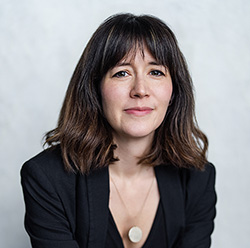
Sarah Myers West has spent the last fifteen years interrogating the role of technology companies and their emergence as powerful political actors on the front lines of international governance. Sarah brings this depth of expertise to policymaking in her current role co-directing AI Now, with a focus on addressing the market incentives and infrastructures that shape tech’s role in society at large and ensuring it serves the interests of the public. Her forthcoming book, Tracing Code (University of California Press) draws on years of historical and social science research to examine the origins of data capitalism and commercial surveillance.
Sarah’s award-winning research is featured in leading academic journals and prominent media platforms including the Washington Post, the Atlantic, the Financial Times, Nature and the Wall Street Journal. She regularly advises members of Congress, the White House, European Commission, UK Government, Consumer Financial Protection Board and other US and international regulatory agencies and the City of New York, and has testified before Congress on issues including artificial intelligence, competition and data privacy. She recently completed a term as a Senior Advisor on AI at the Federal Trade Commission, where she advised the Agency on the role of artificial intelligence in shaping the economy by working on competition and consumer protection matters. She currently serves on the NY Financial Innovation Advisory Board, AAUP’s AI Working Group and OECD AI Futures Working Group. She holds Doctoral and Masters Degrees from the University of Southern California, where she was the Wallis Annenberg Graduate Research Fellow, and has received Google Policy and New America Cybersecurity Fellowships, as well as a Foreign Language and Area Studies Scholarship.